
Understanding Consular Processing for a Marriage Green Card in 2026
Key Takeaways:
Consular processing is the pathway to a marriage-based green card for spouses living outside the United States, requiring an interview at a U.S. embassy or consulate abroad. The process begins when a U.S. citizen spouse files Form I-130 with USCIS, then moves through the National Visa Center before reaching the consulate. Spouses of U.S. citizens are classified as immediate relatives, meaning no visa quota or waiting period applies. However, 2025 staffing reductions at the Department of State have created processing delays heading into 2026. Working with an experienced immigration attorney can help you navigate the process efficiently.
Consular processing is the method by which a foreign national spouse living abroad obtains a marriage-based green card through a U.S. embassy or consulate. Unlike adjustment of status for individuals already in the United States, consular processing is for beneficiaries residing overseas. As an immediate relative of a U.S. citizen under the Immigration and Nationality Act (INA) § 201(b)(2)(A)(i), your spouse faces no annual visa quota and no waiting period, only standard government processing timelines apply.
We’re an award-winning law firm in San Diego, California, with 50+ years of experience in immigration law. Talk to an immigration attorney at Feldman Feldman & Associates PC by calling 1-619-299-9600 today.
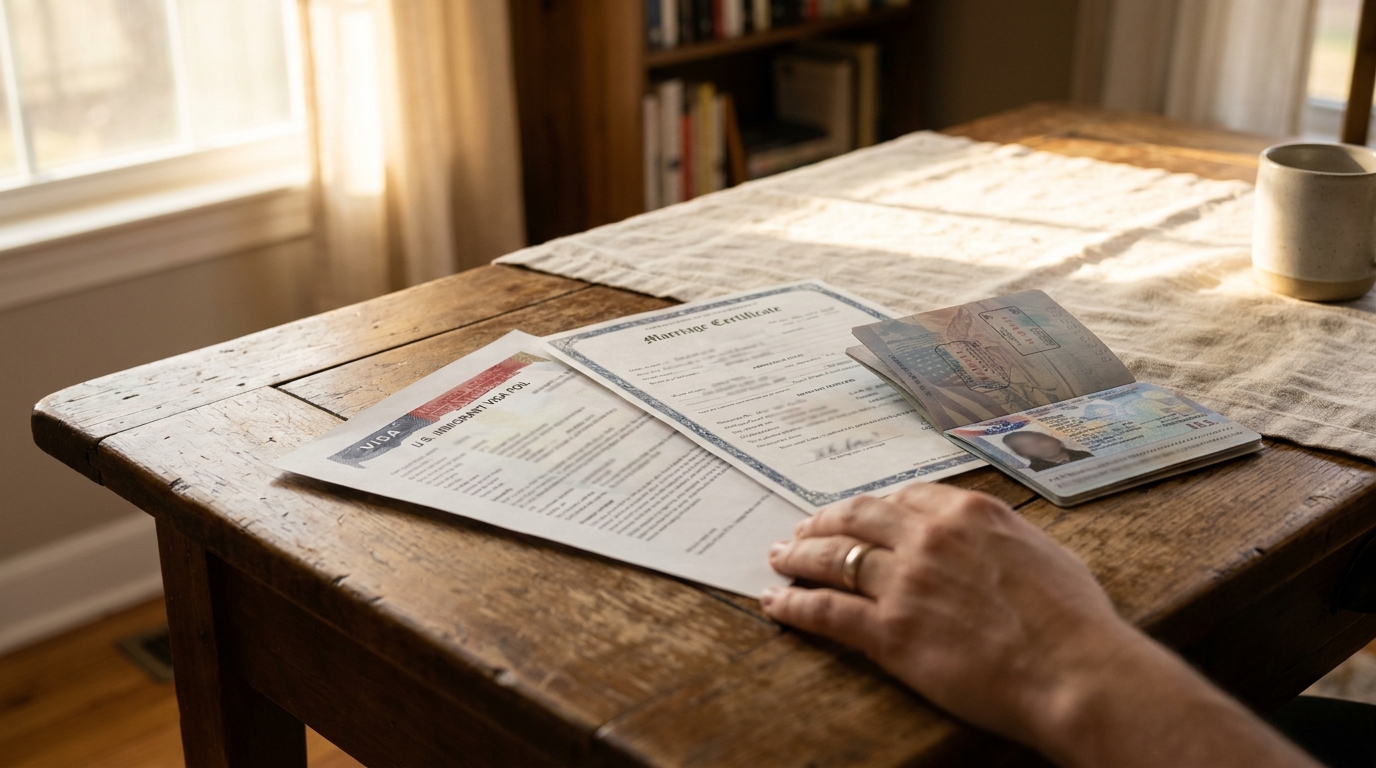
How Does the Consular Processing Path Begin With Form I-130?
The U.S. citizen spouse initiates the process by filing Form I-130 (Petition for Alien Relative) with USCIS. This petition establishes the qualifying family relationship. On the I-130, the petitioner must indicate whether the beneficiary will apply through consular processing or adjustment of status. If the petitioner fails to make a selection and the beneficiary’s address is outside the United States, USCIS will generally route the petition to the Department of State’s National Visa Center (NVC).
The selection is not permanent while the petition is pending. If circumstances change, you may contact the USCIS Contact Center to request a change. This flexibility matters if, for example, your spouse enters the U.S. on a valid visa and becomes eligible to adjust status domestically.
💡 Pro Tip: When filing Form I-130, double-check that you have selected the correct processing option in Part 4. An incorrect selection can cause routing delays.
Why Are Spouses of U.S. Citizens Classified as Immediate Relatives?
Under U.S. immigration law, spouses of U.S. citizens qualify as immediate relatives, which means an immigrant visa is always available. There is no numerical cap and no backlog-driven waiting period. This is a significant advantage compared to spouses of lawful permanent residents, who may face years-long delays due to visa category backlogs.
What About Spouses of Permanent Residents?
Spouses of lawful permanent residents do not receive immediate relative classification. They are placed in the Family Second Preference (F2A) category, where annual numerical limits apply. This distinction can mean substantial waiting periods before a visa number becomes available.
💡 Pro Tip: If you are a lawful permanent resident, filing for naturalization (when eligible) before your spouse’s priority date becomes current could reclassify your spouse as an immediate relative and eliminate the visa backlog wait.
What Are the Steps in Consular Processing for a Marriage Green Card?
The consular processing journey involves several distinct stages after the I-130 petition is approved. Understanding each step helps you prepare documents and avoid preventable delays.
| Step | What Happens | Key Details |
|---|---|---|
| 1. File Form I-130 | U.S. citizen petitioner submits the petition to USCIS | Must select consular processing in Part 4 |
| 2. USCIS Approval | USCIS adjudicates and approves the petition | Processing times vary; check USCIS case status online |
| 3. NVC Processing | Case transfers to the National Visa Center | NVC collects fees, civil documents, and the DS-260 application |
| 4. Consular Interview | Beneficiary attends interview at U.S. embassy/consulate | Consular officer evaluates the bona fides of the marriage |
| 5. Visa Issuance and Entry | Beneficiary receives immigrant visa and travels to the U.S. | Must enter within six months of visa issuance |
How Long Does Consular Processing Take in 2026?
Processing times in 2026 are a real concern for applicants. In July 2025, the Department of State carried out a large-scale reduction affecting approximately 1,350 employees, including over 100 positions in the Bureau of Consular Affairs. Although frontline visa adjudication functions were not directly targeted, the broader staffing reductions have contributed to longer wait times at consulates worldwide. Depending on the specific embassy, interview scheduling delays can add months to the timeline.
Most marriage-based consular processing cases take between 16 and 24 months from I-130 filing to visa issuance: I-130 approval alone averages about 13, 15 months, NVC processing typically adds 2, 4 months, and consular interview scheduling commonly adds another 2, 6 months or more depending on the embassy.
💡 Pro Tip: Track your case status through the CEAC (Consular Electronic Application Center) portal after your case reaches the NVC. Responding promptly to document requests can help prevent unnecessary bottlenecks.
What Happens at the Consular Interview?
The consular interview is the final and most critical step before visa issuance. A consular officer will evaluate whether the marriage is bona fide, meaning it was entered into in good faith and not solely for immigration purposes. The officer will typically ask how the couple met, details about the wedding, and questions about their correspondence and visits. In straightforward cases, the interview may involve only two or three questions.
Does the U.S. Citizen Spouse Need to Attend the Interview?
In most cases, the petitioning U.S. citizen spouse is not legally required to attend the consular interview abroad. However, attending may be helpful in situations involving potential red flags, such as a short courtship, significant age difference, or limited in-person contact. The petitioner’s presence can demonstrate commitment and help address concerns.
Preparation is essential regardless of who attends. Bring organized documentation of your relationship, including photographs, communication records, joint financial documents, and affidavits from friends or family. Strong evidence reduces the likelihood of administrative processing or requests for additional documentation.
💡 Pro Tip: Practice answering common interview questions with your spouse before the appointment. Consistency in your answers about how you met, daily routines, and future plans strengthens your case.
When Is Consular Processing Required Instead of Adjustment of Status?
Certain circumstances make consular processing the only available path. Under INA § 245(a) (8 U.S.C. § 1255), adjustment of status is generally available only to individuals who were inspected and admitted or paroled into the United States. If your spouse entered without inspection, they are typically ineligible for adjustment and may need consular processing. However, departing the U.S. after accruing more than 180 days of unlawful presence triggers three-year or ten-year inadmissibility bars under INA § 212(a)(9)(B)(i). In these situations, a waiver of unlawful presence under INA § 212(a)(9)(B)(v), requiring demonstration of extreme hardship to a qualifying U.S. citizen or lawful permanent resident relative, may be required.
Understanding the difference between these pathways is critical. Choosing incorrectly can result in wasted time, denied applications, or triggering bars to reentry. For a detailed comparison, review our guide on adjustment of status vs. consular processing.
Conditional Residence and I-751 Filing
If your marriage is less than two years old when the green card is approved, your spouse will receive conditional permanent residence valid for two years. You must jointly file Form I-751 (Petition to Remove Conditions on Residence) within the 90-day window before the conditional green card expires. Missing this deadline can result in loss of status.
How an Immigration Lawyer in San Diego Can Help With Consular Processing
An experienced immigration attorney can guide you through each phase of consular processing, from initial I-130 filing through interview preparation. Marriage-based green card cases require careful document assembly, accurate form completion, and strategic planning around potential issues like prior immigration violations or complex relationship timelines. Feldman Feldman & Associates PC has over 50 years of experience handling marriage immigration in San Diego.
Every case carries its own set of facts and potential challenges. Whether navigating NVC document requests, preparing for a consular interview, or determining whether a waiver is necessary, knowledgeable legal counsel matters. An immigration lawyer in San Diego familiar with current USCIS adjudication trends can help you build the strongest possible petition.
💡 Pro Tip: Start gathering relationship evidence early. Joint bank statements, lease agreements, travel itineraries, and photos with timestamps all strengthen your case and make interview preparation smoother.
Frequently Asked Questions
1. How long does consular processing take for a marriage green card in 2026?
Timelines vary by consulate, but most cases take between 16 and 24 months from I-130 filing to visa issuance. The 2025 staffing reductions at the Department of State have extended wait times at many posts. Check your specific consulate’s processing times for current estimates.
2. Can I switch from consular processing to adjustment of status after filing Form I-130?
Yes, you can request a change while your I-130 is pending by contacting the USCIS Contact Center. However, your spouse must meet eligibility requirements for adjustment of status, including lawful admission or parole into the United States under INA § 245(a).
3. What documents do I need for the consular interview?
You will generally need your approved I-130 notice, civil documents (birth certificates, marriage certificate, divorce decrees), financial support evidence (Form I-864), medical examination results, police clearances, and proof that your marriage is bona fide. The NVC will provide a detailed checklist.
4. Does my spouse need an immigration lawyer in San Diego if they are abroad?
While legal representation is not required, working with an attorney is strongly recommended. An experienced immigration lawyer can file and monitor the I-130 petition, communicate with the NVC, and help your spouse prepare for the consular interview. This is particularly valuable when cases involve complicating factors like prior visa denials or unlawful presence.
Moving Forward With Your Marriage Green Card Case
Consular processing is a structured but detail-intensive path to bringing your spouse to the United States. From filing Form I-130 through the consular interview and visa issuance, each step requires accurate documentation and careful timing. With staffing reductions at the Department of State creating longer wait times in 2026, proactive preparation and experienced legal guidance are more important than ever.
Contact Feldman Feldman & Associates PC to discuss your marriage green card case. Reach out to our immigration attorneys today or call 1-619-299-9600 to schedule a consultation.