
Continuous Residence: The Backbone of Your Naturalization Case
Key Takeaways: Continuous residence means maintaining an unbroken permanent home in the United States as a lawful permanent resident throughout the statutory period before filing Form N-400. Most California applicants must show five years of continuous residence plus at least 30 months of physical presence, while spouses of U.S. citizens may qualify after three years. Absences abroad of more than six months create a rebuttable presumption of a break, and absences of one year or more disrupt continuity outright. Certain workers, service members, and religious workers may preserve time abroad by timely filing Form N-470 under INA 316(b) and INA 317. California applicants must also reside in the state or service district for at least three months before filing.
Continuous residence means maintaining an unbroken permanent home in the United States as a lawful permanent resident for the full statutory period before you file Form N-400. Most applicants in California must show five years of continuous residence, while spouses of U.S. citizens may qualify after three years. The concept involves maintaining a permanent dwelling place in the United States tied to your domicile or principal actual place of residence. Understanding this element early helps you time your application and avoid a denial.
Feldman Feldman & Associates PC is based in San Diego and represents clients nationwide. We’re an award-winning law firm in San Diego, California, with 50+ years of experience in immigration law. Talk to an immigration attorney at Feldman Feldman & Associates PC by calling 1-619-299-9600 today.
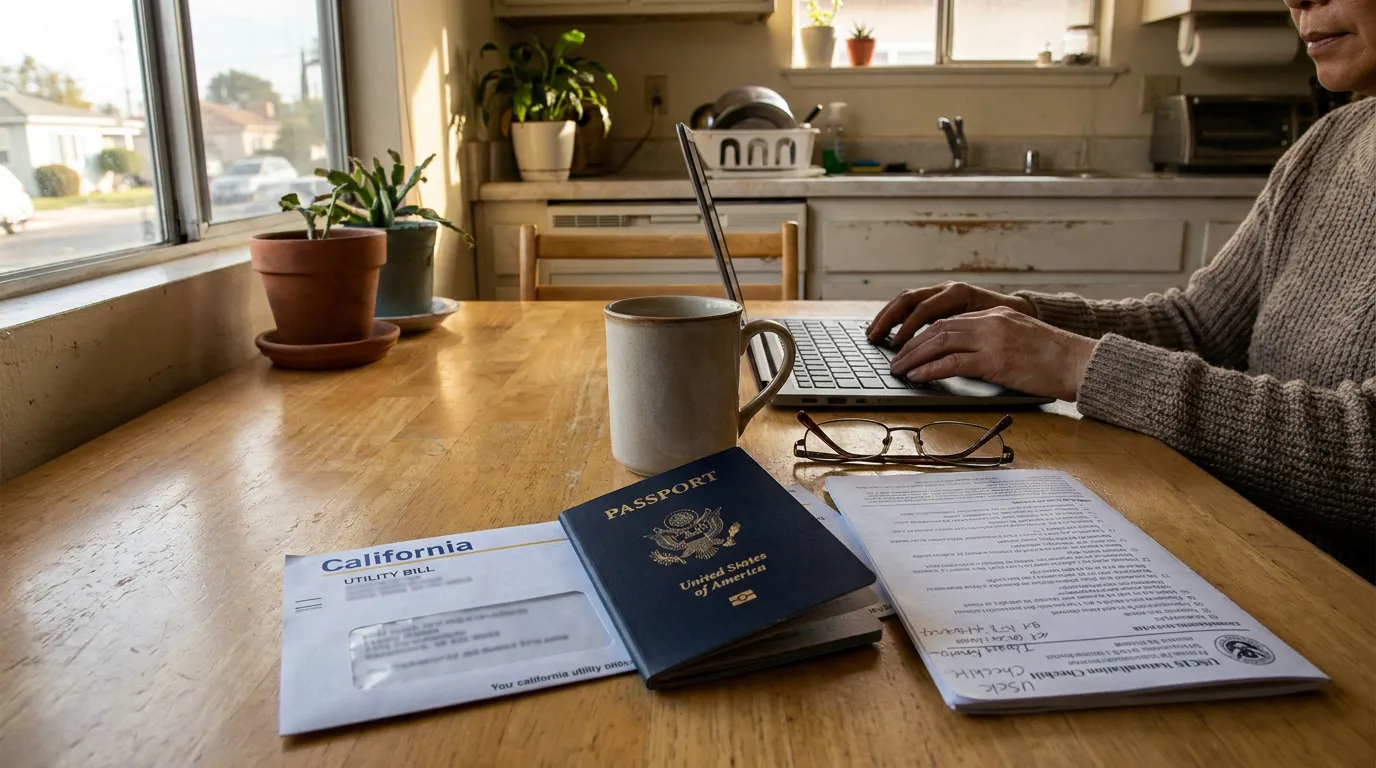
What Continuous Residence Actually Means Under Federal Law
Continuous residence is a distinct legal concept, and it is not the same as physical presence. Continuous residence measures whether you have kept an unbroken home base in the country, while physical presence counts the actual days you spent inside the United States. Residence is defined as the applicant’s domicile, or principal actual dwelling place, under 8 CFR 316.5(a).
Federal regulations set the baseline rule. Under 8 CFR 316.2(a)(3), an applicant must have resided continuously within the United States for at least five years after having been lawfully admitted for permanent residence. The USCIS Policy Manual reinforces that the applicant must have resided continuously in the United States after lawful permanent resident (LPR) admission for at least 5 years prior to filing. You can review the controlling federal regulation on the continuous residence regulation at Part 316.
💡 Pro Tip: Keep a written travel log of every trip outside the country, including departure and return dates. USCIS officers frequently cross-check this against your passport stamps at the interview.
The Five-Year Rule and Meeting U.S. Citizenship Requirements
The general u.s. citizenship requirements start with five years of continuous residence plus a physical presence threshold. In addition to the five-year residence rule, applicants must satisfy a separate physical presence test. Under 8 CFR 316.2(a)(4), an applicant must have been physically present in the United States for at least 30 months of the five years preceding the filing date. These are two independent tests, and meeting one does not excuse the other.
Timing your filing correctly protects your eligibility. Applicants may generally file Form N-400 up to 90 days early on the residence clock. After a break in continuity, however, a new statutory period must be completed. Filing too early can trigger a denial, so the calendar matters as much as the substance of your case.
Residence Rules When You Live in More Than One State
Where you file your taxes can decide which state claims your residence. When an applicant claims residence in more than one state, the regulation resolves the conflict by looking to the location from which annual federal income tax returns have been and are being filed. Filing California returns while claiming California residence keeps your record consistent and reduces adjudication confusion.
| Applicant Type | Continuous Residence | Physical Presence |
|---|---|---|
| Standard LPR | 5 years | At least 30 months |
| Spouse of U.S. citizen | 3 years | Reduced period |
| Certain qualifying classes | Reduced period possible | May count time abroad |
How Absences Abroad Can Break Your Continuity
The length of a trip outside the country determines its effect on your continuous residence. Short trips rarely cause problems, but longer absences carry escalating consequences. An absence for more than 6 months but less than 1 year creates a rebuttable presumption of a break in continuity. That presumption is rebuttable, meaning you can present evidence, but courts and officers apply these exceptions narrowly and the burden stays with you.
A trip of one year or more has harsher consequences. Under 8 CFR 316.5(c)(1)(ii), absences of one year or more shall disrupt the continuity of residence. After such a break, a five-year applicant may generally reapply four years and one day after returning, and a three-year applicant two years and one day after returning.
Evidence is what turns a presumption in your favor. To rebut a presumed break, you may present documents showing you never abandoned your U.S. home. Helpful evidence often includes:
- California tax returns filed as a resident during the absence
- A maintained lease, mortgage, or home ownership in San Diego
- Continued U.S. employment, bank accounts, or a valid driver’s license
- Immediate family remaining in the United States
💡 Pro Tip: If you know a trip abroad may exceed six months, gather your evidence before you leave rather than scrambling to reconstruct it afterward.
Preserving Residence While Living or Working Abroad
Some applicants can protect their continuous residence even during long absences by filing the right form on time. Certain workers may preserve residence during a qualifying absence of one year or more by filing Form N-470 under INA 316(b). The regulation at 8 CFR 316.5(d)(1) requires that the application be filed before the applicant has been absent from the United States for a continuous period of one year. An approval can also cover a qualifying spouse and dependents abroad. This benefit generally applies to those employed by the U.S. government or qualifying American firms and organizations. Note that filing Form N-470 preserves continuous residence but does not, by itself, satisfy the physical presence requirement unless a separate exception applies.
Reduced periods exist for specific categories. Certain classes of applicants may be eligible for a reduced period of continuous residence and physical presence, and some may count time residing abroad as residence. These categories include qualifying employees such as intracompany transferees and multinational executives working for American firms engaged in foreign trade, as well as religious workers or missionaries, under INA 316(b) and INA 317. You can read the USCIS guidance on preserving residence abroad for the standard framework.
Government employees and service members have their own carve-out. U.S. government employees, including members of the U.S. armed forces, are eligible to apply for an exception to the continuous residence requirement as long as their residency outside the United States was on behalf of the U.S. government. Applicants who preserve residence under INA 316(b) may also qualify for related physical presence benefits under INA 316(c).
💡 Pro Tip: File Form N-470 well before your absence approaches the one-year mark. A late filing generally cannot cure a break that has already occurred.
Establishing Your Residence in San Diego and California
California applicants must also satisfy a state and service-district residence requirement. An applicant must have resided for at least three months in a State or Service district having jurisdiction over the applicant’s actual place of residence. For someone living in San Diego, that means maintaining residence within the USCIS district covering the area for at least three months before filing.
Consistency across your immigration filings strengthens your record. If you obtained your green card through marriage, your continuous residence documentation should align with your prior I-130 petition and any pending Form I-751 to remove conditions. Conditional residents must generally file Form I-751 within the 90-day window before the conditional card expires, and a mismatch between filings can invite a request for evidence.
Local guidance matters when timelines get complicated. Naturalization processing times vary by field office, and coordinating an N-400 with a pending removal-of-conditions case takes careful sequencing. If you want to explore your options with a naturalization lawyer San Diego residents trust, a case-specific review is the best starting point. You can also follow ongoing developments through our immigration law updates for practical filing insights.
Frequently Asked Questions
-
Does a two-week vacation abroad break my continuous residence?
No, brief trips generally do not disrupt continuous residence. Problems typically begin only when an absence exceeds six months. Even then, an absence between six months and one year creates a rebuttable presumption you can overcome with strong evidence.
-
What is the difference between continuous residence and physical presence?
They are two separate tests you must both satisfy. Continuous residence looks at whether you kept an unbroken home in the country, while physical presence counts actual days inside the United States. Standard applicants need five years of continuous residence and at least 30 months of physical presence.
-
Can I count time I lived abroad toward my residence requirement?
In limited circumstances, yes. Certain qualifying employees, service members, and religious workers may preserve or count time abroad under INA 316(b), INA 317, and Form N-470. These exceptions are fact-specific and interpreted narrowly.
-
How long must I live in San Diego before filing my N-400?
You generally must reside in the state or service district for at least three months before filing. For San Diego residents, that means establishing residence within the local USCIS jurisdiction. Filing your California tax returns as a resident supports this claim.
-
If my residence was broken, when can I reapply?
You must establish a new period of continuous residence. A five-year applicant may generally reapply four years and one day after returning, and a three-year applicant two years and one day after returning. You may generally file up to 90 days before completing that new period.
Putting Your Continuous Residence Case Together
Meeting the continuous residence element rewards careful planning. The default rule requires five years of continuous residence and 30 months of physical presence, with a three-year track for qualifying spouses and reduced periods for specific categories. Absences, tax filings, and consistency across your prior petitions all influence the outcome. Because eligibility depends on your specific facts, a tailored review is the most reliable way to protect your path to citizenship.
Schedule a consultation with our team at Feldman Feldman & Associates PC to review your timeline and documentation. Reach out to our immigration attorneys by calling 1-619-299-9600 or contact us now to get started on your naturalization case.