
Can You Start Working for a New H-1B Employer Before USCIS Makes a Decision?
Key Takeaways:
Yes, under H-1B portability rules at 8 CFR 214.2(h)(2)(i)(H), eligible H-1B workers may begin employment with a new employer once a non-frivolous petition is filed with USCIS, or on the requested start date, whichever is later. This right stems from the American Competitiveness in the Twenty-First Century Act (AC21), Public Law 106-313. However, portability only applies when three specific conditions are met. Workers moving from cap-exempt to cap-subject employers face additional hurdles, including the annual H-1B lottery.
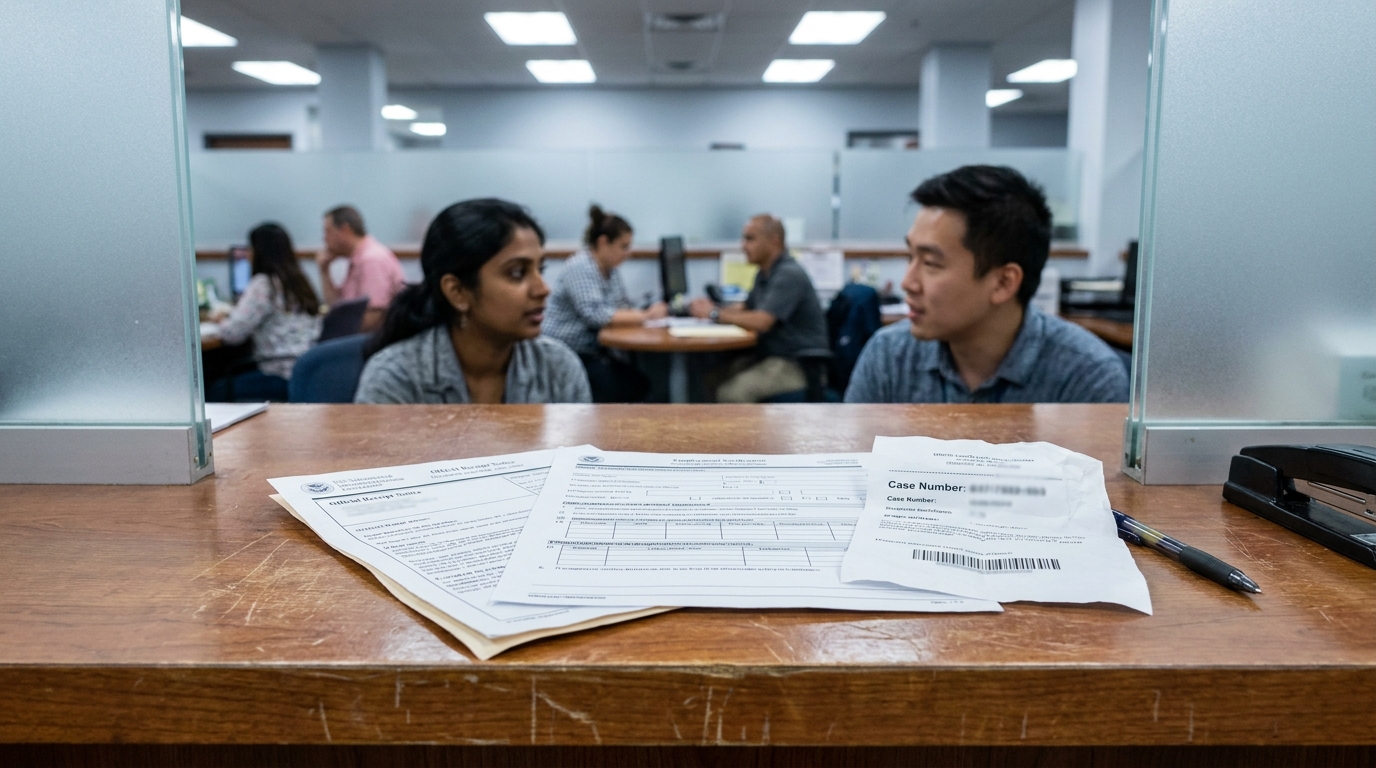
H-1B Portability: The Short Answer
If you hold valid H-1B status and your new employer files a non-frivolous H-1B petition, you can generally begin working before USCIS issues a final decision. This is H-1B portability, one of the most important protections for H-1B workers considering a job change. Under INA section 214(n) and 8 CFR 214.2(h)(2)(i)(H), eligible H-1B nonimmigrants may start new or concurrent employment upon petition filing or the requested start date, whichever is later.
We’re an award-winning law firm in San Diego, California, with 50+ years of experience in immigration law. Talk to an immigration attorney at Feldman Feldman & Associates PC by calling 1-619-299-9600 today.
Three Conditions You Must Meet for H-1B Portability
H-1B portability is not automatic; you must satisfy three specific requirements. As confirmed by the State Department’s Foreign Affairs Manual, under INA section 214(n):
- Lawful admission: You must have been lawfully admitted to the United States.
- Timely filing: Your new employer must file a non-frivolous H-1B petition before your current authorized stay expires.
- No unauthorized work: You must not have engaged in unauthorized employment prior to the new petition filing.
If any condition is not met, portability does not apply, and you risk falling out of status. A "non-frivolous" petition has an arguable basis in law and fact per 8 CFR 214.2(h)(2)(i)(H)(1)(ii). You must meet the regulatory definition of an "eligible H-1B nonimmigrant," which excludes those who previously worked without authorization. Workers who changed to a different nonimmigrant status from H-1B are not in H-1B status for portability purposes.
💡 Pro Tip: Keep copies of every I-94 record, H-1B approval notices (I-797), and pay stubs. These documents help establish lawful admission and continuous authorized employment if USCIS questions your eligibility.
What the 2025 Final Rule Changed
On January 17, 2025, a DHS final rule took effect that codified longstanding portability practices into federal regulations. Published in the Federal Register on December 18, 2024 (89 FR 103054), this modernization rule confirmed that eligible H-1B beneficiaries need not wait for a final decision to begin working at a new employer.
The rule also clarified portability’s application to same-employer amended petitions. H-1B workers may not begin working under materially changed employment terms (new location, significantly different duties) until the amended petition is approved, unless they independently qualify for portability under 8 CFR 214.2(h)(2)(i)(H). If you’re an eligible H-1B nonimmigrant and the amended petition is non-frivolous and timely filed, you may continue working while USCIS adjudicates the petition.
💡 Pro Tip: Portability allows you to start working, but a pending petition is not an approval. If USCIS denies the petition, your employment authorization ends. Maintain communication with immigration counsel throughout adjudication.
There Is No Formal "H-1B Transfer"
Despite common terminology, there is no H-1B transfer under immigration law. Each new employer must file its own H-1B petition. Prior approval does not guarantee the next employer’s petition will be approved. USCIS evaluates every petition independently, examining whether the position qualifies as a specialty occupation, whether the employer-employee relationship is bona fide, and whether the Labor Condition Application (LCA) complies with prevailing wage requirements.
You can change H-1B employers as many times as you wish, and may hold concurrent H-1B positions with multiple employers. However, each employer must obtain its own approval. The six-year maximum H-1B period applies personally, not per employer. Time with one employer counts toward the six-year total. For more on employer changes, review our guide on transferring your H-1B to a new employer.
When the H-1B Cap Becomes a Factor
Workers moving from cap-exempt to cap-subject employers face a significant hurdle. If you work for a qualifying institution like a university or affiliated nonprofit research organization, you likely obtained H-1B status outside the annual cap. Moving to a private-sector company with no qualifying institution connection likely subjects you to the cap, requiring entry in the annual H-1B registration lottery held each March.
Success depends on lottery selection for one of roughly 85,000 H-1B slots available each fiscal year (65,000 regular cap plus 20,000 U.S. advanced degree exemption). If the quota is exhausted, you may not change employers until October 1 of the following fiscal year. You may continue working for your current cap-exempt employer while awaiting selection. Factor this timing into career planning before leaving a cap-exempt position.
💡 Pro Tip: Before resigning from a cap-exempt position, consult an H-1B visa attorney to determine whether your target employer is cap-subject. Leaving prematurely could delay your job change by an entire year.
What Happens If Your Prior H-1B Has Expired
If your authorized H-1B stay expired before the new petition was filed, portability does not apply because timely filing is required. Under 9 FAM 402.10-11(A)(b), if you’re outside the United States with an expired visa stamp and no approved petition, you’re ineligible for a new H-1B visa until USCIS approves the pending petition. You cannot enter the United States to begin working while the petition remains pending.
| Scenario | Can You Start Working Under Portability? | Additional Notes |
|---|---|---|
| Valid H-1B status, new petition filed | Yes, upon filing or start date (whichever is later) | Must meet all three portability conditions |
| Cap-exempt to cap-subject employer | Only if selected in H-1B lottery | Subject to 85,000 annual cap |
| H-1B authorized stay expired before new petition filed | No, portability conditions not met | If outside the U.S., must also wait for petition approval to obtain new visa |
| Same employer, amended petition (new location) | Yes, if eligible H-1B nonimmigrant | Portability covers amended petitions too |
| Previously worked without authorization | No | Disqualifies you from portability |
Practical Considerations for H-1B Job Changes
Timing and documentation are critical when relying on H-1B portability. The FAM acknowledges that portability guidance is not consistently applied at all CBP ports of entry. Carry documentation of the pending petition, including your receipt notice (I-797C), when traveling internationally.
Your new employer’s immigration counsel should file the H-1B petition with a certified LCA and supporting evidence demonstrating a valid specialty occupation and proper wages. If the petition lacks an arguable basis in law and fact, it could be deemed frivolous, undermining your portability rights entirely.
💡 Pro Tip: If pursuing an employment-based green card through labor certification (PERM), a job change can affect your priority date and PERM process. Discuss long-term immigration strategy with your attorney before making a move.
Frequently Asked Questions
1. Can I start working for a new employer the same day the H-1B petition is filed?
Generally, yes. Under 8 CFR 214.2(h)(2)(i)(H), eligible H-1B beneficiaries may begin new employment upon filing of a non-frivolous petition or the requested start date, whichever is later. You must meet all three portability conditions.
2. What does "non-frivolous" mean in the context of H-1B portability?
DHS defines "frivolous" as a petition with no arguable basis in law and fact. If your new employer’s petition presents a legitimate specialty occupation, proper LCA, and supporting evidence, it meets the non-frivolous standard under 8 CFR 214.2(h)(2)(i)(H)(1)(ii).
3. Does my six-year H-1B clock reset when I change employers?
No. The six-year maximum applies to the worker, not the employer. Time with any H-1B employer counts toward the cumulative six-year limit. Extensions beyond six years may be available with a pending PERM application or approved I-140 petition under Sections 104(c) and 106(a) of AC21.
4. Can I travel internationally while my new H-1B petition is pending?
Travel during a pending transfer carries risk. If your prior visa stamp expired, you may not re-enter until the new petition is approved and you obtain a new visa stamp at a U.S. consulate. CBP officers may apply portability guidance inconsistently. Departure from the United States while a change-of-employer petition that requests an extension of stay is pending will generally not serve as a basis to deny the extension request; however, departing while a change-of-status petition is pending (for example, changing from F-1 to H-1B) may be treated as abandonment of the change-of-status request.
5. Do I need to go through the H-1B lottery again if I change employers?
It depends. If you hold cap-subject H-1B status and move to another cap-subject employer, you generally don’t need the lottery again. However, moving from a cap-exempt to cap-subject employer likely requires lottery selection.
Protecting Your Status During an H-1B Job Change
H-1B portability is powerful but requires careful planning and precise execution. Every condition must be satisfied, every deadline met, and every document in order. Whether you’re a worker weighing opportunities or an employer onboarding H-1B talent, getting this wrong risks loss of status, gaps in employment authorization, and disruption to green card plans.
💡 Pro Tip: If your current employer withdrew or plans to withdraw your H-1B petition, act quickly. Under 8 CFR 214.1(l)(2), you may have up to 60 consecutive days following employment termination to remain in authorized stay, but must have a new non-frivolous H-1B petition filed before that grace period expires to use portability. Contact an immigration lawyer immediately.
If you need guidance on H-1B portability, job changes, or long-term immigration strategy, Feldman Feldman & Associates PC is here to help. Our attorneys have decades of experience navigating complex H-1B matters for workers and employers nationwide. Contact our immigration team today or call 1-619-299-9600 to schedule a consultation.